The Desk
Museum Art Loans Impose Strict Operational Restrictions and Multi-Month Lockups
Lending private masterpieces to public institutions offers significant prestige but requires navigating rigorous facility standards, federal indemnity programs, and long-term sales bans.
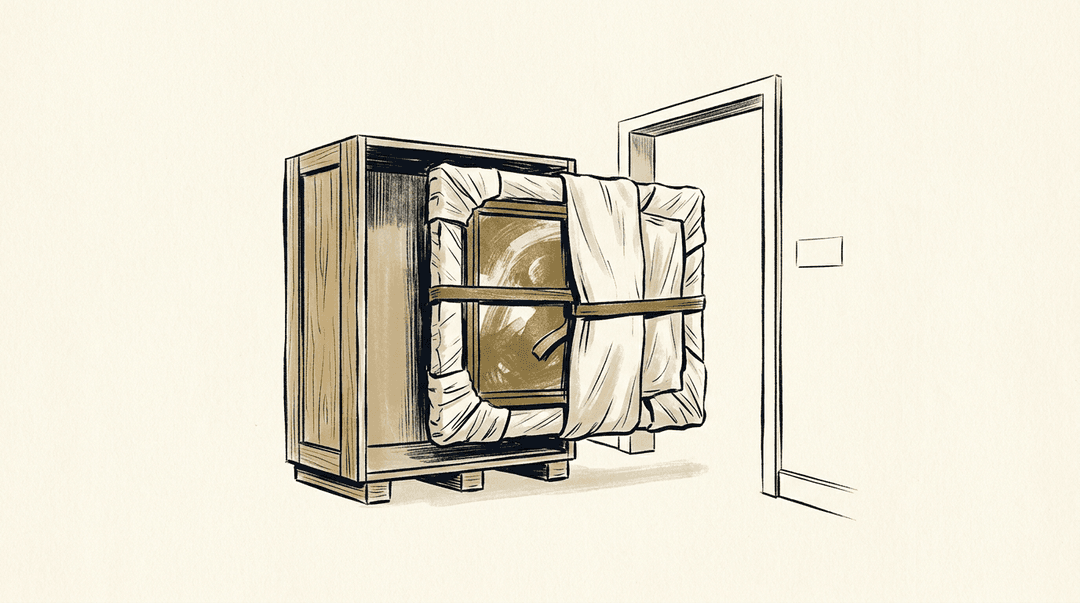
Lending private art to public institutions offers cultural prestige but subjects the owner to significant operational restrictions, including multi-month lockups and strict facility requirements. While the public exposure of a masterpiece can elevate a collection, the transaction is not a simple handoff. Instead, it is a highly structured legal and logistical process where the lender yields substantial control over the physical custody, commercial mobility, and conservation parameters of the asset.
Valuation, Risk and Control Evidence
Documented valuation, risk and control factors shape the portfolio decision.
| Evidence | Documented by |
|---|---|
| Bankofamerica, Org, Ac, Getty | |
| Bankofamerica, Org, Ac |
Selected: Portfolio risks — Bankofamerica, Org, Ac, Getty
To secure a loan, institutions enforce strict lead times and sales restrictions. Guidelines from the Metropolitan Museum of Art state that loan requests must be received at least twelve months in advance of the exhibition opening date, while Bank of America Private Bank reports that most museums often require lenders to agree that they won’t sell their artwork for some stated length of time. These institutional frameworks transform highly liquid private assets into temporarily locked-up cultural property, requiring careful alignment with the owner's broader liquidity and estate plans.
The financial trade-offs of a museum loan extend far beyond the absence of rental income. Bank of America Private Bank notes that all the carrying costs associated with a work on loan are usually borne by the museum, which can save the lender substantial expenses in nondeductible outlays. However, this transfer of carrying costs comes with rigorous compliance demands and potential administrative overhead. For instance, the Metropolitan Museum of Art charges loan fees to borrowers with whom it does not have a reciprocal relationship, and requires that display plans, including case materials and construction, be reviewed and approved months in advance of an exhibition opening. Furthermore, borrowing venues must satisfy detailed environmental and security standards. According to National Museums Scotland, borrowing venues are evaluated using standardized documentation, such as the UKRG Facilities Report or the American Alliance of Museums Standard Facilities Report, which require continuous environmental readings for the same period as the loan in the previous year.
A central mechanism in these transactions is the allocation of risk through government-backed indemnity or commercial insurance. The available record does not establish a standard lending covenant, valuation treatment, or remedy for that scenario. For international exhibitions, programs like the U.S. Government’s Arts & Artifacts Indemnity Program, created by Congress in 1975[1] and expanded in 2007,[1] minimize insurance costs by offering federal backing. Under the Government Indemnity Scheme in the United Kingdom, administered by Arts Council England, government-backed cover is provided against loss or damage, restoring the lender to the same financial position based on the current market value of the object.
Despite these insurance frameworks, physical movement introduces irreversible risks to the artwork's physical state. The J. Paul Getty Museum highlights that loan decisions depend heavily on the ability of the object to withstand the rigors of transport, handling, and public display. To protect fragile works, the Getty Museum enforces strict conservation measures, noting that works on paper recently exhibited or lent to a traveling exhibition may not generally be lent again for a multi-year period. For private owners, this means a single exhibition loan can restrict the physical display and enjoyment of a work within their own residence for a prolonged period. Additionally, the Getty Museum notes that it typically lends only to public or private museums and other accredited institutions, meaning private collections must navigate these institutional channels to access the benefits of museum-backed provenance.
Ultimately, a museum loan is a sophisticated partnership that requires reconciling the owner’s private enjoyment with public stewardship. While the Victoria and Albert Museum emphasizes that lending allows objects to be seen in new contexts by diverse audiences, it also notes that the benefit of increased public access must be offset against the risks arising from packing, handling, movement, and transportation. Before committing an asset to a public exhibition, a collection's management team must resolve whether the long-term benefit to the work's provenance justifies the immediate loss of control, the physical risks of transit, and the multi-year restrictions on both sale and display.
Evidence limits: the valuation basis behind the figures is not disclosed in enough depth. On this record alone, a reader cannot establish which value -- for tax, insurance, collateral, succession, or sale -- should govern the decision.
Related Coverage
Pricing Cultureauction - Sep 29, 2026
The Auction Result Is Not the Seller's Proceeds
Negotiated private transactions and structured consignment fees mean the final cash returned to a seller diverges significantly from public hammer prices.
Recent coverage involving the same entity.
jewelry - Sep 23, 2026
Private Sales Channels Transform Into Primary Liquidity Venues for Cartier and Heritage Assets
As market cycles compress, sophisticated collectors are bypassing public auction volatility in favor of structured, off-market private-treaty transactions.
Recent Pricing Culture context on this market.
trading_cards - Sep 20, 2026
Capital Retreating From Fine Art Finds Liquidity in Standardized Trading Cards
As global art sales drop, the secondary market for graded collectibles is capturing a larger share of high-net-worth passion-asset allocations.
Recent Pricing Culture context on this market.
collectibles - Sep 25, 2026
Rembrandt Export Bar Highlights Regulatory Friction in Private Masterpiece Sales
A temporary export block on the Portrait of Catrina Hooghsaet demonstrates how national heritage policies restrict international liquidity and introduce transaction risks for high-value acquisitions.
Recent Pricing Culture context on this market.
Sources
- 01
National Endowment for the Arts
Arts and Artifacts Indemnity ProgramSource passage
The U.S. Government’s Arts & Artifacts Indemnity Program was created by Congress in 1975 to provide the American people with access to art and artifacts of historical and cultural significance by minimizing the costs of insuring international exhibitions. In 2007, Congress expanded eligibility under the Program to include coverage of works of art owned by U.S. entities while on exhibition in the United States. The Indemnity Act authorizes the Federal Council on the Arts and the Humanities to indemnify museums against loss or damage to works of art or artifacts that are lent to museum exhibitions. The National Endowment for the Arts (NEA) administers the Indemnity Program on behalf of the Federal Council on the Arts and the Humanities (FCAH) . The FCAH is composed of statutorily appointed members, including heads of Federal Agencies with arts-related programs. The FCAH is the governing body with the authority to approve indemnity agreements, which are backed by the full faith and credit of the United States. In the event of loss or damage to an indemnified object, the FCAH must certify the validity of the claim and request Congress to authorize payment. The FCAH considers applications within two programs: International Indemnity and Domestic Indemnity . Applications are first reviewed by NEA staff for eligibility and completeness. Applications are then assessed by Indemnity Advi
- 02
The Metropolitan Museum of Art
Guidelines for Requesting LoansSource passage
When deemed appropriate, The Met is pleased to support loans to scholarly exhibitions at qualified venues. Borrowers should be tax-exempt institutions open to the public. Under special circumstances, loans to commercial galleries or governmental locations may be considered. All loans are subject to the approval of The Met Director and review of the Board of Trustees. Send a written request on letterhead to the attention of Max Hollein, Director via email at TheMetOutgoingLoans@metmuseum.org . Include in the request letter the title of the exhibition, exhibition dates at each venue and the title/artist name and Accession number of the object(s) you wish to borrow. Refer to our collection online for the Accession number and note the dimensions for potential size limitations at your venue. When viewing the object record on the website, please refer to the Exhibition History section as certain departments may post loan restrictions. The loan request should also include an overall description of the exhibition and how the requested works would add value to the exhibition. Loan requests must be received at least twelve (12) months in advance of the exhibition opening date. A facility report for each venue should accompany the loan request letter whenever possible. The Metropolitan Museum of Art requires that facility reports are the American Alliance of Museums standardized version.
- 03
Bank of America Private Bank
Lending art and collectibles to museumsSource passage
Among their many tasks, museum curators are charged with designing exhibitions that are intended to advance academic research and stimulate the public’s interest and knowledge about a particular work, an artist, a group of artists or movement(s) in art history. 1 Exhibitions often present works of art in novel ways in order to create new thought-provoking narratives about moments and trends in art history. A recent example is Monet/Mitchell , an exhibition that toured several U.S. museums in 2022 and 2023. It provided a fresh view of two of the most experimental painters of the 20th century, Claude Monet and Joan Mitchell. Part of any curator’s challenge in staging an exhibition lies in the fact that even the largest and best-known museums rarely contain enough materials in their own permanent collections to be able to adequately “tell the story” behind the exhibition. This makes borrowing works from other museums, dealers and collectors an inevitable (and expensive) element to staging most exhibitions. Private collectors tend to be eager to lend works from their personal collections to such shows. While these loans certainly help museums fulfill their educational goals, foster research and drive attendance, they can also be very beneficial to the collector in a number of ways. For example, all the carrying costs 2 associated with a work on loan are usually borne by the museum,
- 04
National Museums Scotland
LoansSource passage
National Museums Scotland welcomes loan requests, and is committed to providing the best possible physical and intellectual access to all our collections and expertise throughout Scotland and the UK, and around the world. As Scotland’s national museum we engage across the nation and around the world, ensuring our collections, expertise and programmes make wide-reaching impacts beyond the walls of our museums. National Museums Scotland’s outgoing loans programme is an essential part of opening up the collections to new audiences. Many objects from the collection are on long-term loan to venues throughout the UK and overseas. Many objects are also made available for short-term loans every year. Objects from the National Museums Scotland collection can be found at museums throughout the UK and internationally. You can also download this information as a pdf . If you require any further information, please contact our Registrar team at loans@nms.ac.uk Our policy on lending and borrowing is set out in our Collection Information and Access Policy . Formal requests to borrow from the collections should be made using our online loans request form or in writing to the Director. Formal requests should include the following information: Object(s) requested for loan List these including where possible, National Museums Scotland accession numbers. An overview of your exhibition or project P
- 05
Collections Trust
Insurance and indemnity suggested procedureSource passage
By accessing this resource, you agree to the Spectrum licence . You should have a written procedure that explains the steps to follow when managing and documenting insurance. This suggested procedure is useful starting point. It is given as text and also as a workflow diagram. However you do it, your own procedure should meet the minimum requirements of the Spectrum standard . In this step, ‘policy’ refers to your own your museum’s decisions about what to insure or indemnify. You must normally insure or indemnify: Objects on loan to you (including in transit) – loans are usually subject to contractual agreements, including a requirement to insure or indemnify. Objects on loan from you (including in transit) – it is normally the borrower’s responsibility to insure or indemnify objects on loan to them, and you should get written evidence that appropriate cover has been arranged. In some cases you might agree in advance to insure objects you are lending, and include this in your loan agreement with the borrower. Working exhibits – there are statutory liabilities requiring specialist cover associated with aeroplanes, cars, boats, locomotives, steam vehicles, mechanised exhibits and mining equipment. Objects with a readily identified high market value – these may include fine art, precious metals, gemstones and coin collections, clocks, watches and certain classes of biological mate
- 06
Museums Galleries Scotland
Government Indemnity SchemeSource passage
The Government Indemnity Scheme , often called GIS, is an indemnity scheme that supports UK museums by providing an alternative to commercial insurance. GIS provides government-backed cover against loss or damage to art or cultural objects borrowed by UK museums from private lenders or from non-national museums and galleries in the UK or abroad. GIS exists for the public benefit. It aims to enhance and widen access to objects of scientific, technological, artistic, or historic nature. Objects that are being borrowed and covered by GIS can be for public display (temporary or long-term) or for research purposes. GIS covers the objects during moving to and from the borrowing museum, while in storage at the borrowing museum, installation, display, and dismantling of exhibitions. There is no charge to the borrowing museum to access GIS cover. GIS is administered by Arts Council England (ACE) for the whole of the UK on behalf of Department for Digital, Culture, Media & Sport (DCMS), the Scottish Government, and Welsh Assembly. Those wishing to apply for the indemnity need to apply through ACE . Any non-commercial museum, gallery, or library can apply through ACE for GIS. You don’t need to be an Accredited Museum to apply. Borrowing institutions need to demonstrate that they meet certain requirements around security, environmental control, and standards for packing, transport, and dis
- 07
Getty Museum
Requesting Art Object Loans from the Getty MuseumSource passage
Please note the Getty Museum typically lends only to public or private museums and other accredited institutions. Please direct any loan requests in writing to: Timothy Potts Maria Hummer-Tuttle and Robert Tuttle Director The J. Paul Getty Museum 1200 Getty Center Drive Suite 1000 Los Angeles, CA 90049 Written requests for loans from the Paintings, Drawings, Sculpture & Decorative Arts, Manuscripts, and Antiquities Collections of the Getty Museum must be submitted with exact opening and closing dates for the exhibition no later than nine months in advance of the opening date (this also applies to changes to original requests). For loans of drawings, we are unable to lend to more than 1 venue and the display period cannot exceed 20 weeks. Display limits for other types of loan objects will be determined on a case-by-case basis. Written requests for loans from the Photographs Collection of the Getty Museum must be submitted with exact opening and closing dates for the exhibition no later than nine months in advance of the opening date if requesting under 30 objects, and if more than 30, 12 months in advance (this also applies to changes to original requests). For photograph loans, we are unable to lend to more than three venues, with a display period of 20 weeks or less at each venue. As a conservation measure, works on paper recently exhibited at the Getty Museum or lent to a tr
- 08
Victoria and Albert Museum
Loans policy and conditionsSource passage
The Victoria and Albert Museum is one of the world's great museums, housing a vast collection of art and design which reflects many civilisations, styles and subjects. The collection covers more than two thousand years of creativity from many parts of the world. We collect objects illustrating and documenting the history of art, craft and design as exemplified in the fields of books, ceramics, digital art, drawings, dress, furniture, glass, jewellery, manuscripts, metalwork, miniatures, paintings, performing arts, photography, plastics, prints, sculpture, silver, tapestries, textiles, toys, watercolours and woodwork. Section 7 of the National Heritage Act 1983, empowers the Board of Trustees of the V&A to lend objects from the collections. The trustees support an active programme of loans as a key means of making the collections more widely available to the public and enhancing the reputation of the V&A as the world's leading museum of art and design. In doing so, they acknowledge the importance of allowing objects to be seen in new contexts by diverse audiences and the value of research as part of the exhibition process. The trustees also lend objects from the collections in order to promote, support and develop the UK creative economy by inspiring designers and makers and, by stimulating enjoyment and appreciation of design. The V&A actively encourages the use of its collecti