Watches / The Desk
Younger Demographics Drive Luxury Market Growth Forcing Brand Strategy Pivots
Demographic shifts are forcing legacy Swiss watchmakers and luxury brands to re-evaluate traditional retail timelines and pricing structures.
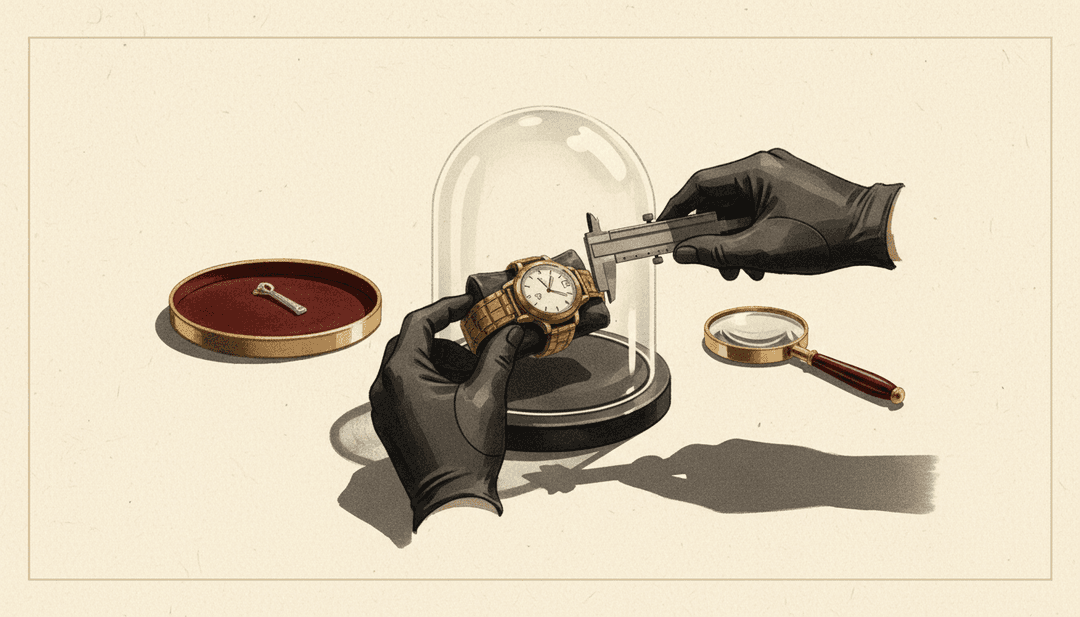
Younger demographics are driving the entire expansion of the global luxury market, forcing brands to pivot away from legacy exclusivity models.
Bain & Company data published by CNBC shows younger generations accounted for all of the luxury market's growth, pushing global personal luxury sales to $381 billion[1] in 2022,[1] including $121 billion[1] in US sales.
This shifting demographic is particularly visible in the luxury watch sector, where younger collectors are transacting earlier than previous generations. On the secondary market platform Bezel, buyers under thirty account for a third of all transactions, CNN reported.[2] Legacy Swiss brands observe a parallel trend; Longines encounters a significant portion of customers seeking restoration or servicing at its London flagship who are under thirty, often inheriting vintage pieces from family members.[2] This early engagement challenges the traditional retail timeline, where luxury timepieces were historically acquired much later in life.
As younger buyers expand their market share, the definition of premium value is shifting from absolute price-based exclusivity toward transparency and alignment. In Forbes, Avy Punwasee of Revenue Management Labs outlined how Gen-Z consumers assess whether a price feels justified through the lenses of personalization, ethics, and authenticity.[3] This cohort's familiarity with digital resale platforms has democratized access, establishing a market structure where value is derived from participation and inclusion rather than artificial scarcity.[3]
By 2030,[1] younger generations are expected to represent a dominant share of global luxury purchases, based on Bain projections published by CNBC. However, the long-term retention of these buyers remains an open question for wealth managers and brand strategists. While early transaction volumes are high, the extent to which these collectors will transition from entry-level vintage acquisitions to high-value primary allocations remains unquantified by current market data.
Related Coverage
Pricing Culturewatches - Sep 12, 2026
Secondary Rolex Market Expansion Reshapes Luxury Watch Valuation Baselines
Annual secondary sales of the Swiss brand are projected to approach the turnover of its primary manufacturing operations.
Recent coverage involving the same entity.
watches - Sep 14, 2026
Jérôme Marcu Debut Watch Highlights Value of Bench-Scale Craftsmanship
The release of the Marcu Initial showcases how independent watchmakers leverage decades of institutional experience to capture high-end collector interest.
Recent coverage involving the same entity.
watches - Sep 13, 2026
Rolex Factory-Set Collecting Standards Eclipse Aftermarket Customization in High-Profile Portfolios
Prominent collectors are increasingly rejecting aftermarket alterations in favor of original manufacturer specifications, reshaping the secondary-market valuation baseline for gem-set luxury timepieces.
Recent coverage involving the same entity.
watches - Sep 11, 2026
Rolex Off-Catalog Allocations Highlight Growing Opacity of Primary Watch Market
The unpublicized distribution of gem-set references to brand ambassadors highlights the challenges of valuing assets that bypass traditional retail and public auction channels.
Recent coverage involving the same entity.
Sources
- 01
Cnbc
Gen Z is driving luxury sales as wealthy shoppers get youngerJan 17, 2023
Source passage
Generation Y, also known as millennials, and Generation Z accounted for all of the luxury market's growth last year. Analysts and luxury executives say the appeal of luxury brands to ever-younger consumers is tied to a surge in wealth creation over the past few years, along with social media. Luxury sales have so far been largely immune to rising interest rates, a slowing economy and high inflation. Luxury shoppers are getting wealthier and younger, with purchases by some of the newest consumers expected to grow three times faster than older generations over the next decade, according to a new report. Generation Y, also known as millennials, and Generation Z accounted for all of the luxury market's growth last year, according to a report from Bain & Co. Spending by Gen Z and the even younger Generation Alpha, or those under 13, is expected to make up a third of the luxury market through 2030, reflecting "a more precocious attitude toward luxury" among the younger ranks than older generations, the report said. Gen Z consumers are starting to buy luxury goods — everything from designer handbags and shoes, to watches, jewelry, apparel and beauty products — at age 15, three to five years earlier than millennials did, the report said. "By 2030, younger generations (Generations Y, Z, and Alpha) will become the biggest buyers of luxury by far, representing 80% of global purchases," it
- 02
Cnn
Gen Z's love for retro watches has little to do with keeping timeApr 1, 2026
Source passage
Evan Fry was born in 2003, a point in human history when many people’s back pockets held a Nokia 1100 or the Sony Ericsson T610. Mobile phones had been displaying the time on their LCD screens for almost a decade by this point — and the anxiety of how they might replace the traditional wrist watch was already in full swing. “Many young people see them as obsolete as sundials,” read one 2005 newspaper article . “For them, cell phones are the new watches.” Throughout his life, the time has been available to Fry on iPhone screens, laptops, TVs, electric ovens, central heating systems, Nintendo DS’s and even beamed eeriely through bathroom mirrors . Which makes it all the more interesting that Fry has collected more than 35 watches, averaging between $1,000 and $2,000 a piece. So far, his prized possession is a Tag Heuer Carrera — a silver linked piece with a deep magenta bezel which he bought for around $3,500. One day, Fry hopes to have a H Moser on his wrist, though some models retail for roughly around $50,000 . He’s already tried on his favorite, featuring a vanta black dial and no indexes, in the shop. “It’s just to die for,” he said. Aged 22, Fry is part of a growing Gen Z cohort of watch lovers. According to secondhand luxury watch retailer Bezel, those under 30 account for a third of the company’s transactions. This group has been previously underestimated by legacy brands
- 03
Forbes
Gen-Z Is Redefining Luxury: How Leaders Can Rethink Premium Offers - ForbesDec 15, 2025
Source passage
Avy Punwasee is a Partner at Revenue Management Labs . We help companies develop and execute pricing solutions to maximize profits. Premium pricing used to mean exclusivity. A higher price implied higher status. That model no longer resonates. Gen-Z, an extremely informed and values-driven generation, is rewriting what “luxury” means. They no longer equate price with prestige. They assess whether the price feels justified, a reflection of transparency, personalization and ethics. According to a First Insight study, 73% of Gen-Z consumers are willing to pay more for sustainable product. Many are also looking for brands they perceive as authentic and ethical. Premium is no longer what costs more. It is what feels fair and personal. For Gen-Z, price is one factor in a larger equation. A Queue-it survey found 90% of Gen-Z shoppers will pay a premium for a brand they trust. Price is no longer shorthand for quality but a proxy for integrity. Meanwhile, PwC consumer trends show a paradox. Although 79% of Gen-Z consumers surveyed waits for sales, they often define value through emotional and social alignment. They want to understand what drives price, not just see a discount. Luxury resale platforms such as The RealReal and StockX democratize access to premium goods. They show that value today comes from inclusion, not exclusion. Gen-Z grew up in the subscription economy. Platforms lik