Auction recap / Bonhams
Bonhams Chinese ceramics sale records $274,086, led by a dragon panel
The September online result separates sale-wide totals from the lot records behind the leading prices.
Auction highlights

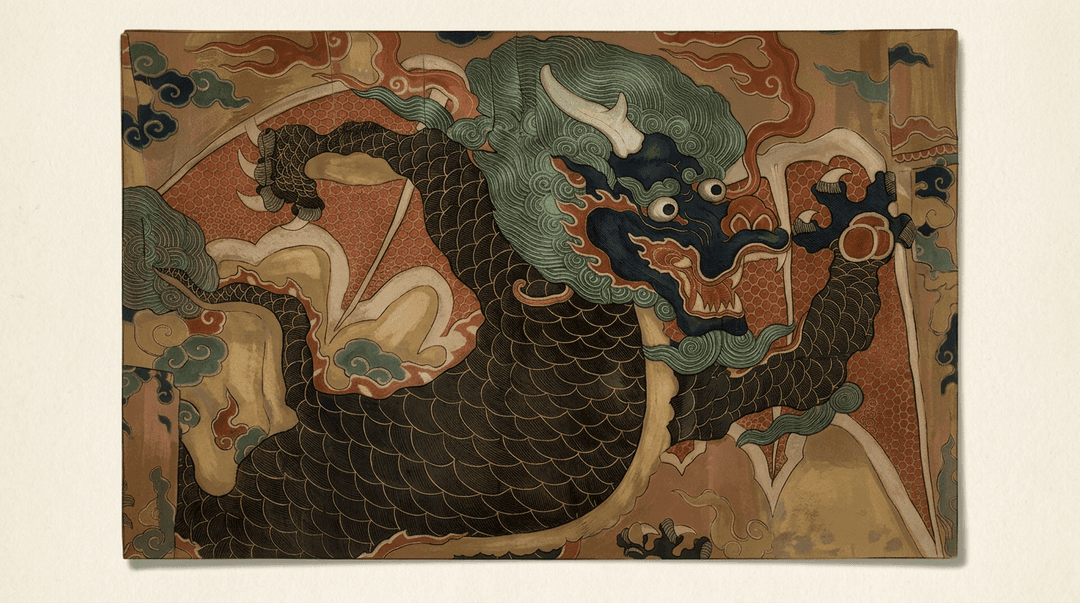
A SILK BROCADE 'DRAGON' PANEL 17th century
Estimate$10–15KSold$30,720
A WUCAI 'DRAGON AND PHOENIX' BOWL Daoguang mark, 20th century
Estimate$1.5–2.5KSold$28,160
A HUANGHUALI CORNER-LEG TAPERED CABINET 19th/20th century
Estimate$15–25KSold— Estimate$2.5–3.5KSold$23,040
A SMALL STEATITE JAR Tang Dynasty
Estimate$2–3KSold$12,800
A LIMESTONE CARVING OF A CELESTIAL ATTENDANT Early 20th century (fitted wood stand)
Estimate$8–12KSold—
A HUANGHUALI SQUARE THREE-TIER PICNIC BOX
Estimate$7–9KSold$8,960
TWO BAMBOO ROOT CARVINGS OF DAOIST IMMORTALS, LAN CAIHE AND LIU HAI Qing Dynasty (2)
Estimate$5–8KSold—
A DEHUA WHITE-GLAZED SEATED FIGURE OF GUANYIN 20th century
Estimate$5–8KSold—
TWO LARGE POLYCHROME STUCCO HEADS OF BUDDHIST GUARDIANS Ming Dynasty (2)
Estimate$5–8KSold—
A PINK-GROUND FAMILLE-ROSE SLENDER BALUSTER VASE AND COVER Circa 1730
Estimate$3–5KSold$7,040 Estimate$5–7KSold—


Estimate track marks the pre-sale range; the tick marks the sold price. Lot photography: Courtesy Bonhams.
Contextual data provided by Pricing Culture Analytics; this is not an exhaustive list. Pricing Culture Analytics organizes publicly available auction data to analyze and produce insights.
A silk brocade dragon panel and a wucai dragon-and-phoenix bowl led the recorded prices in Bonhams's Chinese Ceramics and Works of Art Online sale. The auction closed on 25 September 2026 with $274,086[1] in recorded sales and a 76.4%[1] sell-through rate. Reading the two leading lots together reveals why a catalog title, the object description and the result should be kept distinct when this sale is used as a comparable.
Bonhams dates the silk brocade panel to the 17th century and identifies it as property from a Colorado private collection. Its catalog description gives a sight size of 25 1/4 by 39 3/4 inches and describes woven dragon motifs. The panel's recorded sold price was $30,720[2], compared with a pre-sale estimate of $10,000[2] to $15,000[2]. In this case, the stated private-collection attribution is part of the specific object's catalog record, alongside its dimensions and textile description. The price belongs to that documented lot rather than to a generic category of dragon textiles.
The bowl calls for a different reading. Its title includes a Daoguang mark, while Bonhams dates the object itself to the 20th century. The catalog describes a six-character Daoguang seal mark in underglaze blue and says the bowl was offered without reserve. Its recorded sold price was $28,160[3] against an estimate of $1,500[3] to $2,500[5][3]. The difference between a mark and the cataloged date is material when selecting comparable bowls; the title alone does not describe an object made during the Daoguang period.
Other recorded prices show how varied the objects and their estimates were within this one online session. A pair of carved amber taotie-mask vases and covers recorded $23,040[5] against an estimate of $2,500 to $3,500[5]. A small steatite jar cataloged as Tang Dynasty recorded $12,800[6] against $2,000[6] to $3,000[6]. A huanghuali square three-tier picnic box recorded $8,960[8], within its $7,000[8] to $9,000[8] estimate. These entries place the textile and bowl alongside sculpture, small decorative objects and furniture, each with its own catalog description and price range.
The result record also contains entries without a sold price. A huanghuali corner-leg tapered cabinet was estimated at $15,000 to $25,000[4], and a limestone carving of a celestial attendant at $8,000[9][7] to $12,000[7]; neither has a sold price in the current sale data. Together with the sale's sell-through figure, those entries distinguish the leading prices from the broader catalog. For valuation work, the useful evidence is the exact lot record: what Bonhams described, the estimate it set and, where recorded, the sold price. The source data does not specify whether the sold-price field includes buyer's premium, so the comparisons here use the recorded figure without assigning a premium basis.
Sources
- 01
- 02
- 03
- 04
- 05
- 06
- 07
- 08
- 09