Auction recap / Bonhams
Bonhams History of Science Sale Realizes $1,272,325
The specialized technology and computing auction closed on 14 October 2026, achieving an 88.2% sell-through rate across its curated catalog.
Auction highlights
 Estimate$5–8KSold$13,000Latest bid$10,000
 Estimate$8–12KSold$10,400Latest bid$8,000
 Estimate$1.5–2.5KSold$4,160Latest bid$3,200
 Estimate$1.2–1.8KSold$2,600Latest bid$2,000


Estimate track marks the pre-sale range; the tick marks the sold price. Lot photography: Courtesy Bonhams.
Contextual data provided by Pricing Culture Analytics; this is not an exhaustive list. Pricing Culture Analytics organizes publicly available auction data to analyze and produce insights.
In a sale that closed on 14 October 2026, Bonhams presented its History of Science, Technology & Computing auction, which realized a total of $1,272,325[1]. The specialized event achieved an 88.2% sell-through rate[1], with 15 of 17 lots sold. According to official results published by Bonhams, which serves as the primary source for the sale, the auction brought together rare artifacts, early computer art, and foundational literature tracking the development of modern digital culture.
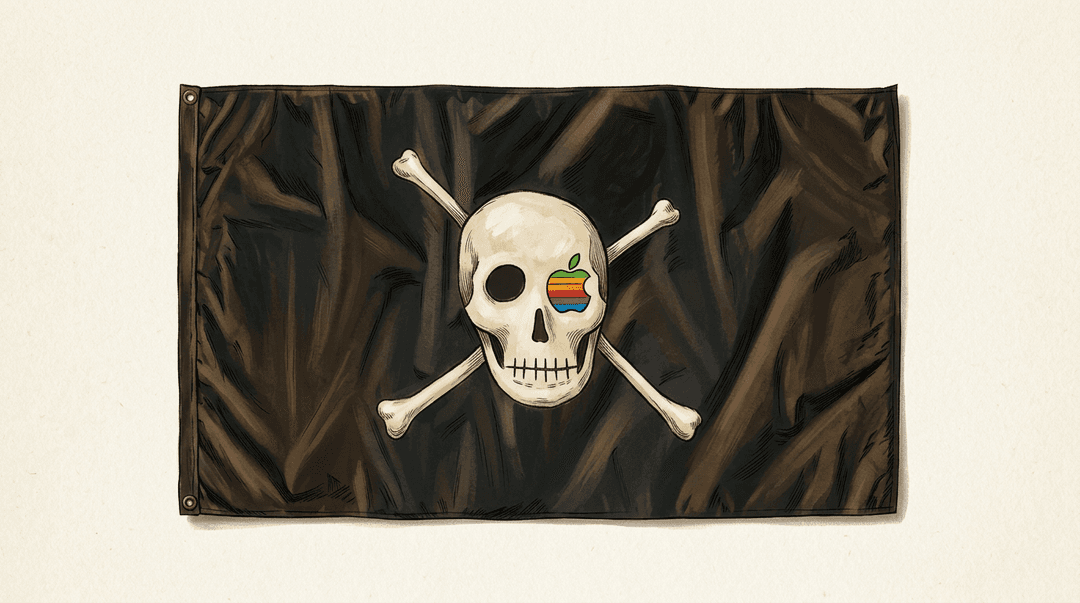
The catalog featured notable artifacts of early computing design and philosophy, including hand-painted corporate symbols and early predictions of digital information networks. Among the highlights was a hand-painted Apple Jolly Roger flag designed by Susan Kare, which represents a key piece of early Apple corporate culture. The flag features the classic skull and crossbones design with an eyepatch styled as the iconic rainbow Apple logo. Additionally, the sale included early computer art portfolios and first-edition treatises exploring the societal implications of artificial intelligence and automated decision-making.
Auction highlights
Sale file- COMPUTER ART. REICHARDT, JASIA; curator. Cybernetic Serendipity: The computer and the Arts. (portfolio and catalogue). London: Motif Editions, 1968. | estimate $5,000[2] to $8,000[2] | sold for $13,000[2]
- "IT'S BETTER TO BE A PIRATE THAN TO JOIN THE NAVY." KARE, SUSAN. b. 1954. An Apple Jolly Roger Pirate Flag. 2015. | estimate $8,000[3] to $12,000[3] | sold for $10,400[3]
- INSCRIBED COPY OF JOSEPH WEIZENBAUM'S IMPORTANT TREATISE ON THE DANGERS OF AI AND COMPUTER DECISION MAKING. WEIZENBAUM, JOSEPH. 1923-2008. Computer Power and Human Reason. San Francisco: W. H. Freeman and Company, 1976. | estimate $1,500[4] to $2,500[4] | sold for $4,160[4]
- H. G. WELLS PREDICTS WIKIPEDIA. WELLS, H. G. 1866-1946. The Idea of a World Encyclopaedia. London: The Hogarth Press, 1937. | estimate $1,200[5] to $1,800[5] | sold for $2,600[5]
The top-performing lots in the sale demonstrated sustained interest in both physical artifacts and rare printed media. The first and only edition of Jasia Reichardt's Cybernetic Serendipity portfolio, published in the summer of 1968, contains seven lithographs representing early milestones in computer-generated imagery. Susan Kare's hand-painted vinyl canvas flag, signed and dated by the artist, represents one of up to 500 examples from a limited edition. In the book and manuscript category, Joseph Weizenbaum's inscribed first-edition, second-printing copy of Computer Power and Human Reason features a personal inscription to Robert Cronk. Finally, H. G. Wells's early vision of a global knowledge base, represented by a first-edition pamphlet of The Idea of a World Encyclopaedia, was accompanied by related publications including a first American edition of World Brain.
Sources
- 01
- 02
- 03
- 04
- 05