Handbags / The Desk
High-End Handbags Displace Natural Diamonds as Preferred Milestone Luxury Assets
Resale values for natural diamonds have fallen significantly, driving a notable shift toward elite leather goods for engagements and major celebrations.
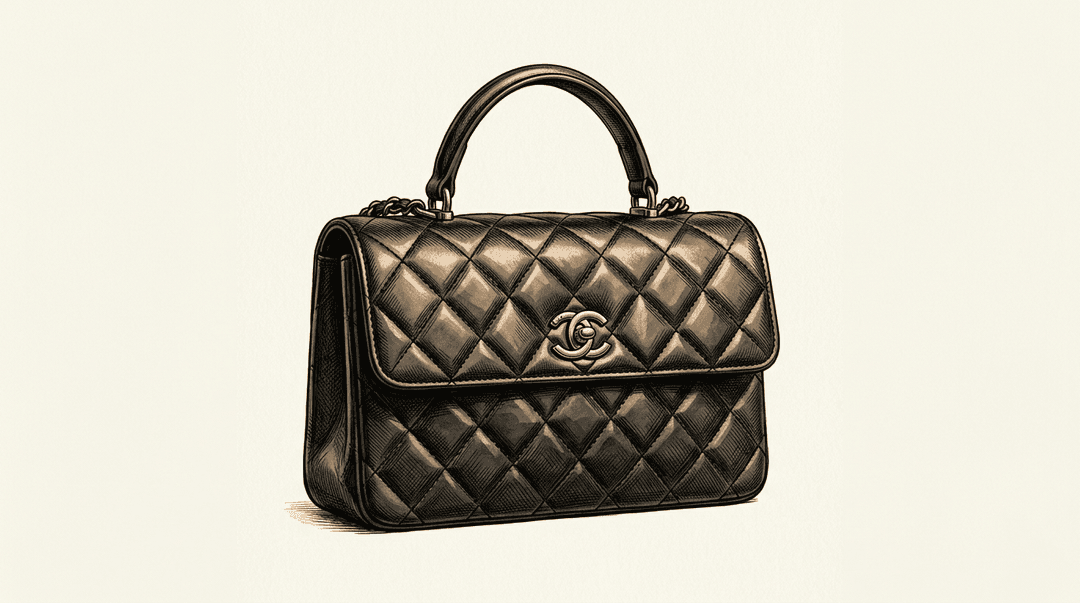
High-end handbags are increasingly displacing traditional natural diamonds as the preferred milestone luxury assets for engagements and major personal celebrations. This behavioral transition represents a significant reallocation of capital within the hard luxury sector, as buyers prioritize the immediate cultural relevance and secondary-market visibility of elite leather goods over traditional gemstones. The decision to opt for a rare purse over a diamond ring reflects a broader reassessment of value retention, portability, and aesthetic utility among contemporary luxury consumers.
This shift in preference aligns with a sharp divergence in secondary-market asset values and corporate valuations. According to the New York Post, the resale prices of natural diamonds have fallen more than 50%[1] since 2021[1]. At the same time, the institutional valuation of major diamond producers has contracted, with Reuters reporting that diamond miner De Beers is valued at about $1 billion[2] as its parent company seeks a sale.
The behavioral shift is visible at retail and resale touchpoints globally, where high-end handbags are openly substituted for jewelry. The New York Post reported on recent transactions at the LoveLuxury boutique in London, where owner Emily Abraham presented a coveted blue Kelly bag, a classic black Birkin with a white gold clasp, and an orange croc-embossed purse. Customers at both the London and Dubai locations explicitly requested these Hermès bags instead of traditional diamond engagement rings, generating substantial engagement across social media platforms like TikTok, Facebook, and Instagram. Handbag expert and Fashion Institute of Technology professor Emily Blumenthal told the publication that high-end bags have replaced jewelry for younger buyers, pointing to pieces like the Fendi Baguette and the Chloe Paddington Bag as examples of modern investment plays that might previously have been a pair of Tiffany studs.[1] Blumenthal noted that rising gold prices and the proliferation of lab-grown diamonds have diluted the traditional cachet of natural stones, altering the decision-making process for major life events.
Resale liquidity and value retention drive much of this asset reallocation. The New York Post highlighted that prominent collectors find high-end handbags offer a more straightforward path to liquidation than jewelry during personal transitions. On major secondary platforms such as Sotheby's, the entry-level price point for a Hermès bag can sit at more than double the starting price of a white-gold diamond bracelet, establishing a robust secondary-market floor.[1] This structural shift has pressured traditional diamond miners, prompting De Beers to launch a lab-grown diamond initiative in 2018[1] in an attempt to capture the changing market. Gem experts also attribute the broader diamond market challenges to factors such as the declining luxury market in China.
The corporate restructuring of De Beers reflects these broader headwinds. Reuters reported that Anglo American has put its stake up for sale, while luxury conglomerate Richemont, a major customer of De Beers, has considered joining the bidding process.[2] This corporate maneuvering highlights how the traditional diamond supply chain is adapting to a market where consumer preferences are shifting toward alternative luxury categories. The involvement of major luxury conglomerates suggests that the industry is closely watching these shifting dynamics and seeking to secure strategic positions.
As the market for luxury hard assets continues to evolve, the preference for tangible, highly visible accessories over traditional gemstones represents a significant reallocation of capital. The long-term stability of natural diamond valuations remains an open question as collectors increasingly prioritize the immediate cultural relevance and secondary-market liquidity of elite leather goods. The ease of transacting in the secondary handbag market, combined with the clear brand equity of makers like Hermès, has created a compelling alternative to the traditional jewelry market.
Related Coverage
Pricing Culturehandbags - Nov 8, 2026
Handwritten Jane Birkin Provenance Creates Singular Auction Values Hard to Benchmark
The sale of a customized Togo leather handbag at Bonhams Paris illustrates why personal artifacts from the namesake actress command distinct premiums over standard luxury assets.
Recent coverage involving the same entity.
Phillips - auction - Nov 1, 2026
Phillips Lists Geneva Jewels: Online Auction Scheduled to Close on 12 November 2026
The upcoming online jewelry sale features signed pieces from Tiffany & Co., Chopard, and Cartier, leading a category that has generated $348,470,178 globally.
Recent Pricing Culture context on this market.
Watches - Nov 8, 2026
Cartier Solidifies Market Position Through Sculptural Form Watches and Unique Commissions
The French house commands attention by emphasizing expressive geometry and rare provenance over standard mechanical complications, driving record-breaking results in the secondary market.
Recent Pricing Culture context on this market.
Watches - Nov 7, 2026
A. Lange & Söhne Shifts Complication Strategy Toward Aesthetic Embellishments
The new Datograph Perpetual features a black dial with hand-applied baguette-cut diamond hour markers and a five-row platinum bracelet.
Recent Pricing Culture context on this market.
Sources
- 01
New York Post
Diamond duds! As De Beers’ sales plummet, even brides want a handbag over a ringNov 4, 2026
Source passage
Three weeks ago at London’s gleaming LoveLuxury boutique, owner Emily Abraham jammed a dozen Hermès bags on a spotless glass counter. There was a coveted blue Kelly bag named for the actress Grace Kelly, a classic black Birkin with an 18-karat white gold clasp and an orange croc-embossed purse that matched the famously bright Hermès packaging. “I’ve just got engaged,” said the customer, an ultra-polished woman named Saniya. “And instead of asking for a ring, I’ve asked for an Hermès bag.” Two days later, another shopper walked into LoveLuxury’s Dubai location and asked bag expert Souhaila Loudiy for the same thing . The social media moments landed hundreds of thousands of views across TikTok, Facebook and Instagram. They also hinted at a new kind of stone-walling. More women are eschewing diamonds in favor of handbags when it comes to milestone markers like engagements, births and new jobs. “I think it’s clear that handbags, particularly high-end bags, have replaced jewelry,” handbag expert and Fashion Institute of Technology professor Emily Blumenthal told The Post. She points to the Fendi Baguette and the Chloe Paddington Bag as examples of Gen Z investment plays that might previously have been a pair of Tiffany studs. “With the price of gold skyrocketing and the rise of lab-grown diamonds, jewelry doesn’t seem to carry the same cachet it used to,” Blumenthal added. That sent
- 02
Reuters
Cartier-owner Richemont considers joining bidders for De Beers, source ...Oct 15, 2026
Source passage
Diamond miner De Beers valued at about $1 billion Anglo American has put 85% stake up for sale, Botswana owns 15% Richemont is a major customer of De Beers Reporting by Clara Denina in London, Olivia Kumwenda in Johannesburg, Alessandro Parodi in Paris, Helen Reid in London, Abigail Summerville and Anuja Bharat Mistry. Writing by Tassilo Hummel and Lisa Jucca. Editing by Emelia Sithole-Matarise, Mark Potter and Susan Fenton Our Standards: The Thomson Reuters Trust Principles. , opens new tab Olivia Kumwenda-Mtambo is the Reuters Africa Mining Correspondent, based in Johannesburg. Before her appointment to the current position, she worked as the Reuters Southern Africa Bureau Chief. She joined Reuters in 2010 and has also reported on the broader economy, including currency and bond markets and monetary policy decisions. ago Retail & Consumer category Sojitz signs agreement to acquire 5% of Vietnam tungsten supplier Masan High-Tech Materials ago World category South Korea fines Coupang $220 million for abusing dominance in food delivery market November 6, 2026 Retail & Consumer category IKEA CEO vows to bring growth back after sales fall for third year November 6, 2026 Retail & Consumer category France lifts wine output forecast despite historically weak crop ago Finance category Berkshire Hathaway speeds up stock buybacks, though profit falls November 6, 2026 Retail & Consumer