Collectibles / The Desk
Family Offices Risk Transfer Complications by Confusing Art Custody With Ownership
With $992 billion in passion assets set to transition, documentation gaps prevent wealth managers from verifying legal title and securing collateral.
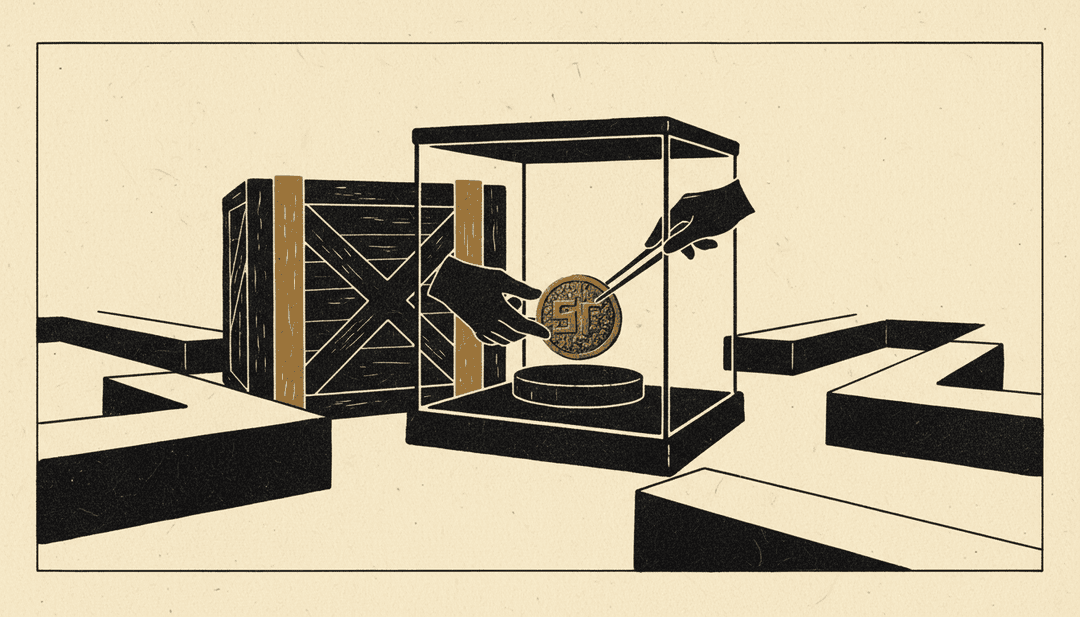
Family offices risk severe title and transfer complications by failing to distinguish physical possession and custody from clear beneficial ownership records for art collections.
The scale of this exposure is demonstrated by the massive pools of capital and physical wealth currently transitioning between generations. Bank of America Private Bank data shows that the number of family offices has tripled since 2019[1], and these entities now manage some $6 trillion[1] in total assets. However, a significant portion of this wealth is held in highly illiquid physical assets that are preparing for succession. The Deloitte Private and ArtTactic Art & Finance Report estimates that $992 billion[2] in art and collectibles is expected to change hands over the next decade, emphasizing the urgency of establishing clear ownership records before these transfers begin.
The core friction lies in the informal nature of art acquisitions compared to traditional financial assets. Rosemary Ringwald, Head of Art Planning at Bank of America Private Bank, explains that most collectors invest for personal pleasure and buy what they love, which often leads to informal custody arrangements where artworks are displayed in private residences without clear documentation of the purchasing entity.[1] Because art is a physical, unregistered asset, family offices often assume that physical possession equates to legal title. This conflation creates a significant operational gap: if an artwork is purchased by a corporate entity or trust but held in a personal residence, the mismatch between physical custody and beneficial ownership complicates the asset's legal status. Without a clear paper trail linking the physical object to a specific legal entity, the family office cannot verify who actually owns the asset.
This lack of documented title has direct consequences for valuation, credit, and insurance. Without verified beneficial ownership records, family offices cannot easily use art as collateral for securities-based lending or specialty credit lines. The available record does not establish a standard insurance requirement or remedy for that scenario. Deloitte data shows that since 2011,[2] wealth managers have increasingly integrated art into wealth management, with hybrid models emerging where family offices partner with external art experts to manage these complexities. However, external partnerships cannot substitute for a centralized internal registry that tracks the legal entity, purchase invoice, and physical location of each asset. If these records are missing, the family office cannot perform basic fiduciary duties, such as updating appraisals or verifying the asset's insurance coverage.
Ultimately, the lack of standardized documentation limits what fiduciaries can execute. While Elizabeth Thiessen, head of Family Office Solutions at Bank of America Private Bank, emphasizes that a significant collection affects a family's larger financial picture, including liquidity and risk management, the available record does not disclose the exact proportion of family offices that maintain complete beneficial ownership registries.[1] Until a family office establishes a formal governance file separating physical possession from legal title, the collection remains an uncollateralized and illiquid asset. This documentation gap leaves the true net realizable value of the estate unresolved and prevents the family from leveraging their physical wealth in broader financial strategies.
Evidence limits: the valuation basis behind the figures is not disclosed in enough depth. On this record alone, a reader cannot establish which value -- for tax, insurance, collateral, succession, or sale -- should govern the decision.
Related Coverage
Pricing Culturecollectibles - Sep 5, 2026
Family offices face tighter collateral criteria for art borrowing bases
Lenders are tightening terms as billions of dollars in physical assets prepare to transition to the next generation.
Recent coverage involving the same entity.
collectibles - Sep 2, 2026
Integrating passion assets into private balance sheets requires purpose-specific valuations
Private wealth structures manage some $6 trillion in assets, yet physical collections are frequently excluded from standard risk-reporting frameworks.
Recent coverage involving the same entity.
collectibles - Sep 1, 2026
Family Offices Risk Wealth Disruptions by Neglecting Art Succession
With private wealth structures managing $6 trillion in assets, emotional biases and unprepared heirs frequently complicate the transfer of highly illiquid physical collections.
Recent coverage involving the same entity.
collectibles - Sep 1, 2026
Fiduciary Risks Rise as Trust-Owned Art Collections Face Succession Deadlines
An impending wealth transfer forces trustees to establish formal governance and purpose-specific valuations for high-value passion assets held within private wealth structures.
Recent coverage involving the same entity.
Sources
- 01
Bank of America Private Bank
How a Family Office Can Help Manage Your Art CollectionSource passage
For many affluent families, a family office has become an indispensable ally in preserving and growing wealth and managing financial complexities. More than 4,500 family offices (triple the number in 2019) together manage some $6 trillion in assets. 1 Yet even as they advise on investments ranging from private equity to real estate and mineral rights, family offices may not fully account for the implications of another kind of asset: art collections. âA significant collection may affect a familyâs larger financial picture, from liquidity and credit to risk management and wealth transfer,â says Elizabeth Thiessen, head of Family Office Solutions at Bank of America Private Bank. âItâs vital to bring a similar level of planning and strategy to art and collectibles as you do for other asset classes.â Itâs vital to bring a similar level of planning and strategy to art and collectibles as you do for other asset classes. Of course, a painting is not a share of stock. âMost collectors invest for personal pleasure and buy what they love,â says Rosemary Ringwald, Head of Art Planning, Planning Center of Excellence, Bank of America Private Bank. The emotional component makes a potential acquisition more nuanced and subjective than, say, buying into a hedge fund. Moreover, the art market can be complex, opaque and mystifying to outsiders. For all their expertise in portio
- 02
Deloitte
Deloitte Art and Finance ReportSource passage
If we have selected the wrong experience for you, please change it above. This publication is a barometer for emerging trends and sentiment in the art and finance industry and highlights developments in the art and wealth management space. The 2025 edition of the biennial Deloitte Private and ArtTactic Art & Finance Report arrives amid market stagnation, shifting collector values, and an unprecedented global wealth transfer, with an estimated $992 billion in art and collectibles expected to change hands over the next decade. As the art and finance ecosystem adapts to demands for transparency, inclusivity, and purpose, innovation and strategic engagement are more critical than ever. Since 2011, the report has tracked the integration of art into wealth management . Over the last 14 years, what began as a question of relevance has become a matter of execution: in 2011, only a quarter of wealth managers offered art-related services; today, 51% do, reflecting a gradual shift in perception and practice. This edition draws on insights from 57 experts and nearly 500 survey responses , featuring stakeholders across the art and finance industry, including private banks, family offices, collectors, and art professionals. It features 30 articles from leading industry professionals , including contributions from eight Deloitte offices across the world. It explores how next-generation collec