Collectibles / The Desk
Vancouver Real Estate Collapse Exposes Title Risks of Art-Backed Credit
A Canadian lawsuit alleges a developer diverted investor funds to buy works by Jean-Michel Basquiat and George Condo, using them as loan collateral.
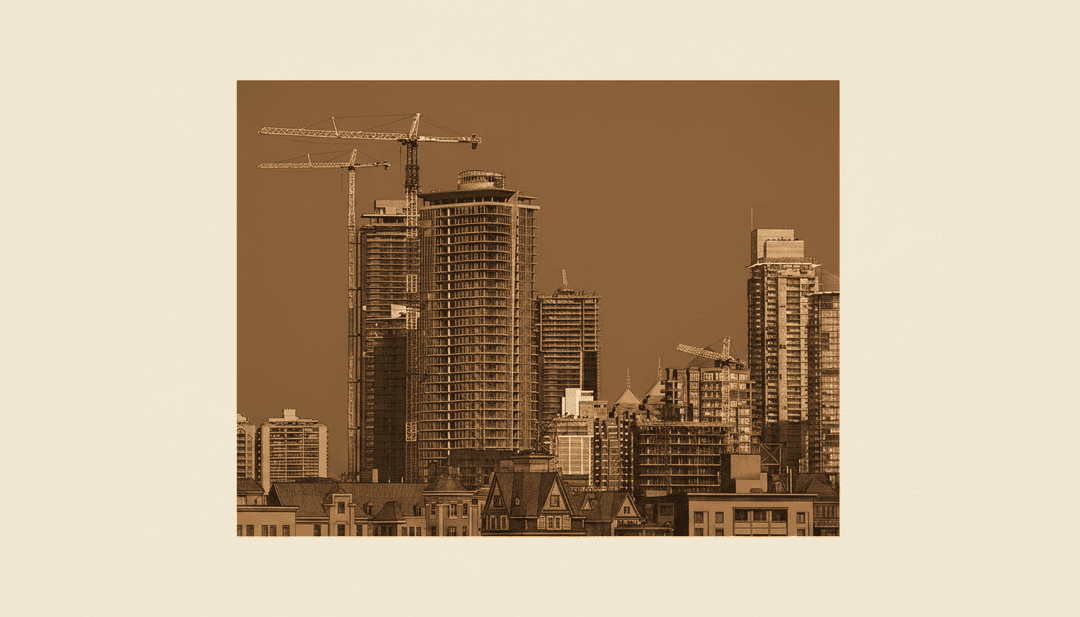
The collapse of Vancouver-based developer Coromandel Properties has exposed the severe title and collateral risks that financial institutions face when art is integrated into corporate real estate structures to secure credit. When property developers divert capital to acquire blue-chip art assets and immediately pledge them as loan collateral, the resulting legal disputes can freeze the liquidity of the underlying works. This dynamic creates competing ownership demands between the original real estate investors and the lenders holding the physical assets, illustrating the systemic vulnerability of using art as a rapid liquidity tool during property market downturns.
According to court filings reported by Artnews, Chinese seed investor Junchao Mo and his sons allege that Jerry Zhong, chief executive of Coromandel Properties, diverted investor capital exceeding $100 million[1] to acquire real estate and art. The lawsuit alleges that Zhong used the art collection, valued at approximately $4.9 million[1] by Artnews and C$6.9m[2] by The Art Newspaper, as collateral to secure a line of credit of up to $2.4 million[1] while the firm collapsed under debts reported at $497 million[1] by Artnews and C$700m[2] by The Art Newspaper.
The legal battle began in 2023,[1] and is proceeding in the Supreme Court of British Columbia, with renewed activity occurring in 2026[1]. The Art Newspaper reported that a British Columbia judge recently granted a request by defendant Jason Wang, a lawyer representing certain parties in the matter, to consolidate three related lawsuits, bringing the complex web of transactions back into active court proceedings. The plaintiffs allege that Zhong lured them into investing through five family trusts and three British Columbia numbered companies, masking the ultimate destination of the capital. According to court documents cited by Artnews, Zhong subsequently misappropriated the line of credit funds for his personal use, leaving the development company unable to meet its obligations. This consolidation of lawsuits indicates that the legal scrutiny is expanding to include the professional advisors who facilitated the corporate structures and transactions.
The collection at the center of the dispute features works by prominent contemporary artists, including Jean-Michel Basquiat, George Condo, and Javier Calleja. The Art Newspaper reported that these works were acquired from local galleries, including the Centre of International Contemporary Art Vancouver and Talisman Gallery. In the secondary art market, works by these artists represent highly liquid assets that can be easily appraised and leveraged. However, when such acquisitions are funded through alleged corporate misappropriation, the transaction history becomes a liability. The case emphasizes the importance of verifying the source of funds for galleries and dealers, as transactions executed through corporate shells or family trusts can be unwound if the purchasing capital is deemed fraudulent. The involvement of local galleries also demonstrates how regional art ecosystems can be utilized to absorb large inflows of capital from unrelated commercial sectors like real estate.
The collapse of Coromandel Properties illustrates the risk exposure for private bankers and art advisors managing the valuation and custody of art used as loan collateral. When a borrower defaults and the underlying assets are tied to active fraud litigation, the net realizable value of the art drops precipitously due to legal encumbrances. Lenders holding these works as collateral face significant title risk, as the plaintiffs may seek to claw back the physical assets to satisfy their outstanding real estate demands. Consequently, financial institutions must implement stricter controls, requiring comprehensive tracing of the capital used to purchase any art offered as collateral, rather than relying solely on third-party appraisals and gallery invoices. The risk of title disputes can lock up assets in litigation for years, destroying the liquidity that makes art an attractive asset class for leverage in the first place.
Related Coverage
Pricing Culturecollectibles - Aug 14, 2026
Rare Competition-Commissioned Talbot-Lago Teardrop Coupe With Le Mans History Heads to Auction
The only competition-commissioned example of the classic French design is expected to command an estimate of $8 Million at the California sale.
Recent coverage involving the same entity.
collectibles - Aug 11, 2026
Michael Jordan Signed Fleer Card Box Sells for $1,480,000
The unique one-of-one item, sold on eBay, represents a growing trend of direct athlete-manufacturer collaborations commanding major premiums in the sports collectibles market.
Recent coverage involving the same entity.
collectibles - Aug 11, 2026
Auction House Leadership Shifts Reveal Strategic Reallocation Toward Old Masters
As Sotheby's and Freeman's install new department heads in 2026, capital inflows into classical art categories are driving transaction volumes higher.
Recent Pricing Culture context on this market.
Sources
- 01
Artnews
Artworks by Basquiat, George Condo, caught in Vancouver fraud lawsuitSource passage
There is a new development in an ongoing fraud lawsuit against the leader of the collapsed Vancouver-based developer Coromandel Properties, whose chief executive allegedly misappropriated funds to acquire an art collection, reports The Vancouver Sun . In 2023, Junchao Mo, a Chinese seed investor and part-owner of Coromandel Properties, and his two sons, Zhao Ming “Robert” Mo and Zi Hao “Calvin” Mo, filed a lawsuit now headed to the Supreme Court of British Columbia against Jerry Zhong, the company’s chief executive and co-owner. They allege that Zhong deceived them into investing over $100 million in the company’s Vancouver-area real estate projects, and deliberately misused those funds to purchase property, feed his own slush fund, and, among other expenditures, acquire 14 artworks worth about $4.9 million. Related Articles Hauser & Wirth Cleared by UK Judge of Breaching Russia Sanctions with Sale of a George Condo Artwork George Condo Returns to Hauser & Wirth, Painting Illuminates Shakespeare's Rebellious Politics, and More: Morning Links for July 9, 2026 The plaintiffs argue that the art acquisitions were then used to secure a loan of up to $2.4 million, while Coromandel Properties, now indebted by some $497 million, was already in financial hot water. Zhong “misappropriated the line of credit funds for his own use,” according to court documents, which add that Mo, who does
- 02
Theartnewspaper
Trove of art by Basquiat, Javier Calleja and others at play in mammoth ...Source passage
Construction cranes dot the Vancouver skyline Photo by formulanone , via Flickr Beneath the dramatic 2023 collapse of the Vancouver real-estate developer Coromandel Properties—which left C$700m ($497m) in debt spread over 16 properties—lies a strange tangle of alleged art and real estate fraud. Interest in a 2023 lawsuit filed by Coromandel Properties’ part-owner Junchao Mo (who resides in Macau) and his sons against the company’s chief executive and co-owner, Jerry Zhong, which is ongoing in the Supreme Court of British Columbia (BC), was reawakened this month when one of the defendants, the lawyer Jason Wang and his law firm, asked to have three lawsuits against him, including this one, heard together. The judge granted his request, and the case was in court again. The plaintiffs in the original lawsuit allege that Zhong lured Mo and his sons into investing in several of his Vancouver-area real-estate projects through five family trusts and three BC numbered companies. They also allege that Zhong used those funds to fraudulently acquire real estate as well as art, which were purchased from Vancouver galleries then allegedly used as collateral for a line of credit. According to publicly available court documents, the value of the art, acquired from the Centre of International Contemporary Art Vancouver (CICA) and Talisman Gallery, was C$6.9m ($4.9m). According to the court doc