Auctions / The Desk
Mystery Bidder Secures Rare T-Rex Fossil in Record Auction Sale
The purchase of the specimen named Gus for over fifty million dollars highlights the growing private demand for premier natural history collectibles.
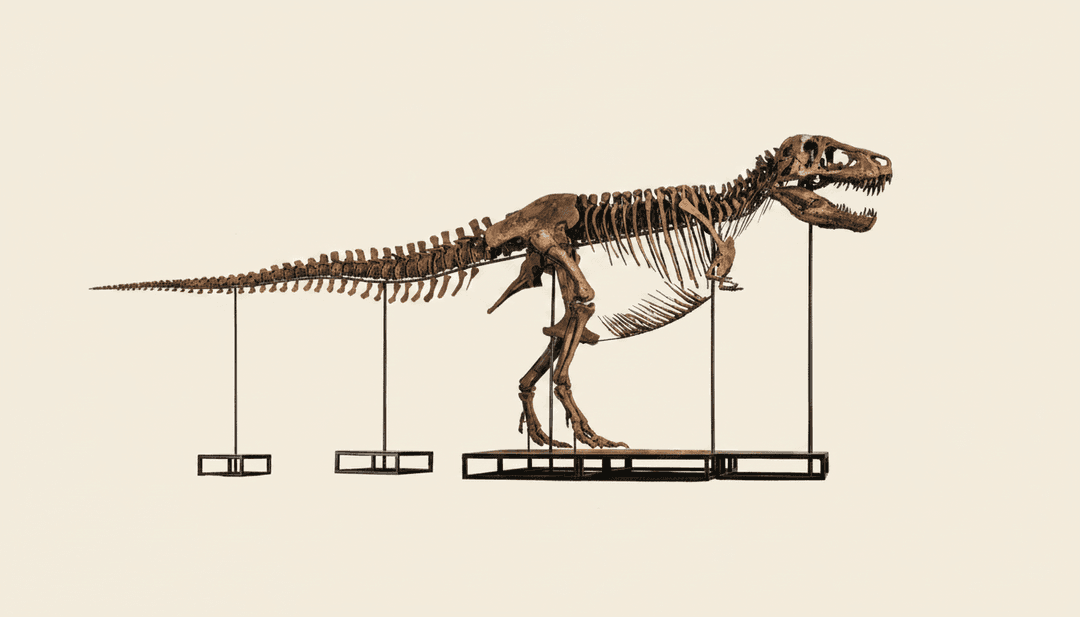
The auction room fell quiet as the bidding escalated for one of the most complete Tyrannosaurus rex specimens ever discovered. Named Gus, this ancient predator found itself at the center of a fierce bidding war that culminated in a historic sale. According to CBS News, the rare fossil sold for a record fifty-point-one million dollars to an anonymous buyer.[1] This massive transaction highlights the intense allure of apex specimens, which have transitioned from scientific curiosities to some of the most coveted trophies in the alternative asset world. For the professionals who track these markets, including appraisers, dealers, and auction specialists, the sale represents a defining moment that will reshape how natural history assets are valued and traded in the coming years.
For private collectors and specialized appraisers, this record-breaking transaction represents more than just a high-profile acquisition. It demonstrates that the market for dinosaur fossils has matured into a legitimate branch of the high-end collectibles sector, behaving much like the markets for rare art, fine wine, or blue-chip classic cars. When a single specimen commands more than fifty million dollars, it establishes an entirely new benchmark that elevates the value of all comparable fossil discoveries currently held in private hands. However, this escalating valuation also presents a significant challenge for public institutions. Museums and research organizations increasingly find themselves priced out of the market, unable to compete with the deep pockets of private individuals who view these prehistoric remains as ultimate status symbols or long-term investments.
The journey of Gus from an excavation site to the auction block reflects a broader trend in the high-end collectibles landscape. As reported by Fortune, the sale of the fossil reflects a significant evolution in the market, with dinosaur bones drawing intense interest from wealthy buyers globally.[2] The anonymity of the winning bidder has fueled intense speculation within the collecting community, with experts debating the long-term implications of such high-value private acquisitions. Some market insiders suggest the buyer could be a private individual planning to display the fossil in a personal gallery, while others hope the specimen might eventually be loaned to a public museum for research. Regardless of its final destination, the transaction demonstrates that the demand for irreplaceable historical artifacts remains incredibly robust, even as other luxury asset classes experience volatility.
For dealers and auction specialists, the success of this sale will likely trigger a rush to bring more paleontological specimens to market. Appraisers will need to adjust their valuation models to account for this new pricing reality, where completeness, aesthetic appeal, and the sheer charisma of a specimen like a Tyrannosaurus rex can command unprecedented premiums. The sale also highlights the absolute importance of provenance and legal compliance in the fossil trade. With millions of dollars at stake, ensuring that specimens are legally excavated, documented, and cleared for private sale has become the top priority for auction houses and dealers alike. Collectors must navigate a complex regulatory environment to protect their investments, making expert guidance more critical than ever before.
Ultimately, the historic acquisition of Gus represents a new chapter for the natural history market. While the scientific community may worry about the privatization of important research specimens, the financial reality is clear: dinosaur fossils have solidified their status as premier luxury assets. As long as wealthy collectors are willing to spend tens of millions of dollars for a piece of prehistoric history, the market for these ancient giants will continue to command global attention. For those who operate at the intersection of history, art, and finance, the record sale of Gus is a clear indicator that the appetite for the extraordinary shows no signs of waning, setting a new standard for what is possible in the world of high-value collecting.
Sources
- 01
- 02