Cars / Brand Intelligence
Original Paint and Factory Certification Dictate Ferrari F40 Valuation Premiums
High-profile acquisitions and recent auction results highlight the strict preservation standards that determine liquidity and pricing for the vintage supercar.
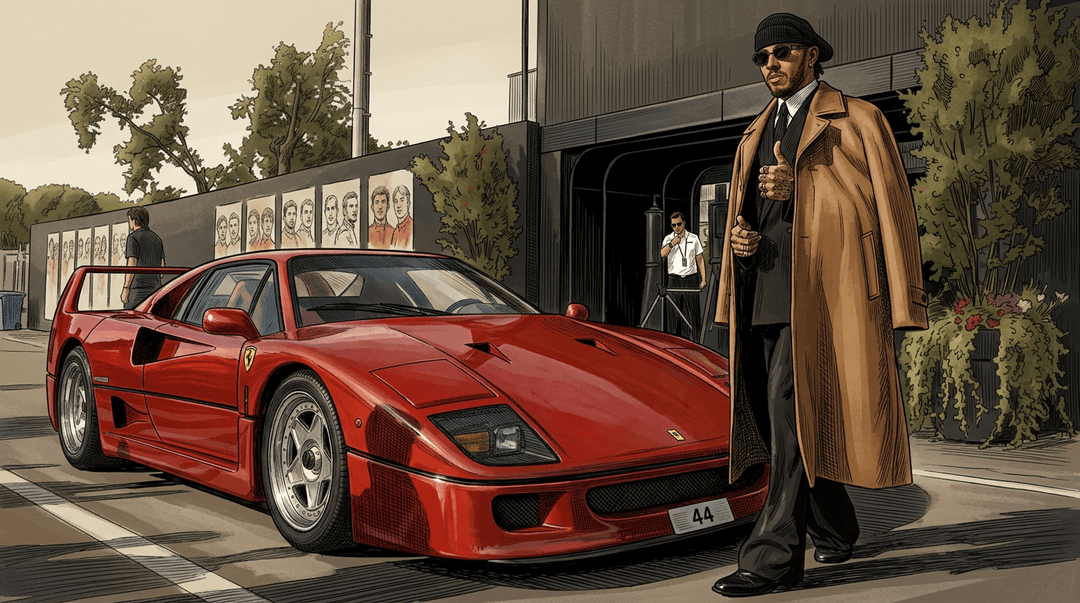
The secondary market for the Ferrari F40 is increasingly dividing along the lines of absolute factory preservation, where unblemished original paint and factory certification dictate multi-million-dollar spreads. While the model has long been a staple of blue-chip car portfolios, transaction data reveals that collectors are willing to pay significant premiums only when a vehicle matches rigorous preservation criteria. This flight to quality is reshaping the valuation landscape, as even minor cosmetic alterations or undocumented histories can impair liquidity and net realizable value.
ESPN documented a U.S.-market example with minimal mileage that recently sold at auction for $8.4M[1]. This benchmark reflects the premium placed on highly original cars built during the production run between 1987[1] and 1992,[1]. The transaction demonstrates that the market's highest tier is reserved for cars that have avoided subsequent modifications or paint work.
The physical mechanism driving this valuation spread is the unique manufacturing process of the vehicle itself. To minimize weight, the factory applied the original red paint so thinly that the weave of the underlying Kevlar and carbon fiber remains visible under proper lighting, a detail ESPN documented as a critical checklist item for top-tier collectors.[1] If this weave is not visible, it indicates the car has been repainted, which immediately lowers its market value. Seven-time Formula One champion Lewis Hamilton recently acquired a highly preserved European-market example that had been stored unused for decades, immediately dispatching the vehicle to the Maranello Classiche department for factory verification before exposing it to public view.[1] This step highlights the role of factory certification as an essential risk-mitigation tool, as unverified provenance or undocumented mechanical work can introduce significant transaction friction and depress realized prices in private treaty sales.
This emphasis on factory-certified heritage coincides with heightened institutional focus on the brand's legacy. The New York Times documented the immense pressure and cultural weight carried by the Italian marque, particularly during its annual homecoming at the Italian Grand Prix in Monza, where Frédéric Vasseur has managed the team since 2023[2]. This intense cultural spotlight reinforces the brand's secondary-market positioning, transforming these vehicles from mere mechanical assets into historical artifacts. For the broader market, the connection between active racing prestige and vintage asset valuation remains a powerful driver of collector demand, directly influencing how financial institutions assess the collateral value of these vehicles.
The ultimate valuation of these vehicles remains bound to the tension between preservation and usability. While a factory-certified, original-paint example commands the highest premium, maintaining that status depends on keeping the vehicle in a static, low-mileage state. The record does not disclose the exact price paid for recent private acquisitions, leaving the precise premium for European-specification, single-owner preservation unresolved. The decision of whether the liquidity benefits of factory certification justify the ongoing custody costs and the strict operational limits required to preserve a car's original state remains a key challenge for collectors.
Related Coverage
Pricing CultureCars - Sep 8, 2026
Ferrari F40 Valuation Premium Centers on Original Paint and Factory Verification
A high-profile acquisition highlights the strict preservation standards and factory certification requirements that dictate liquidity and pricing in the vintage supercar market.
Recent coverage involving the same entity.
Cars - Sep 8, 2026
McLaren Promotional Alignments Face Scrutiny After Alpine Appeal Dispute
Allegations of conflict involving McLaren Special Operations and an FIA appeal judge highlight the reputational risks of luxury brand philanthropic partnerships.
Recent coverage involving the same entity.
Watches - Sep 8, 2026
Rare Rolex Placements Drive Extreme Secondary Market Pricing Spreads
High-profile public appearances of limited-edition steel and custom references expose a widening gap between official retail prices and secondary-market asking prices.
Recent coverage involving the same entity.
watches - Sep 8, 2026
Vacheron Constantin Bypasses Retail Benchmarks With Unpriced Concept Watches
The manufacture's new Tribute to the Animal Kingdom series uses independent artisans to shift the valuation basis from mechanical specifications to unpriced artistic scarcity.
Recent coverage involving the same entity.
Sources
- 01
espn.com
Why Lewis Hamilton brought his dream Ferrari F40 road car and his iconic arrival at Italian GP - ESPNSep 3, 2026
Source passage
Laurence Edmondson Sep 3, 2026, 01:10 PM ET Close • Joined ESPN in 2009 • An FIA accredited F1 journalist since 2011 "Original paint, 69 kilometres on the clock, passenger door never opened." It's the dream listing for anyone in the market for a Ferrari F40 and all three details were among those that convinced Lewis Hamilton to open his chequebook and buy his dream car. The seven-time champion revealed last year that he had sold off the vast majority of his car collection, saying at the time he was "more into art." But he still hankered after a pristine F40 -- a car that he, along with millions of other car enthusiasts around the world, considers art in its own right. Roughly 1,315 F40s were built between 1987 and 1992, making low-mileage examples rare in 2026. Two weeks ago, a U.S. market model (distinguishable by black plastic trim on its front bumper) sold at auction for $8.4M with just 320 miles on the clock. Although Hamilton did not disclose the price he paid, with just 69 kilometres (43 miles) on the clock, it's possible his European market car (arguably the more desirable of the two) could have been in the same ballpark. One feature that is coveted among collectors of all variants of F40 is the original paintwork. To save weight, the car's original paint was applied so thinly over the bodywork that the weave of the Kevlar and carbonfibre underneath is visible under the
- 02
nytimes.com
Ferrari boss Fred Vasseur talks Italian GP pressure, Hamilton’s revival and 2026 hopes - The New York TimesSep 4, 2026
Source passage
Lewis Hamilton and Ferrari Team Principal Frédéric Vasseur celebrate a P2 finish in parc fermé at the 2026 Monaco Grand Prix. Bryn Lennon - Formula 1 via Getty Images MONZA, Italy — Ferrari Formula 1 team principal Fred Vasseur can’t recall the exact year that he first visited the Autodromo Nazionale Monza in northern Italy, but it was some point in the early 1990s. Back then, Vasseur was an engineer in his mid-20s, with dreams of one day working in F1. But his first visit to Monza was for the Gran Premio della Lotteria, a now-defunct Formula 3 race that used to be a staple of the European junior racing calendar. And Vasseur does remember the fond feeling Monza, known as La Pista Magica or the ‘Temple of Speed,’ instilled in him. This only grew as visits to the track — home of the Italian Grand Prix — became an annual affair, initially running his ART Grand Prix team in junior series, then in F1 as a team principal – first with Renault and then Alfa Romeo. But it was when Vasseur first went to Monza as Ferrari’s F1 boss in 2023 that he experienced the full spectrum of emotion and understood the meaning of this track and this race to Italian fans. “You can feel it only when you are at Ferrari,” Vasseur told The Athletic in an interview. “It’s something special.” The Italian GP is Ferrari’s annual homecoming. A chance for its passionate, loyal fanbase, the tifosi, to turn the gra