Brand Intelligence
A. Lange & Söhne Focuses on Historical Pocket Watch Details and Downsized Cases
The Saxon manufacture utilizes its archival engineering and refined proportions to sustain collector interest in its traditional hand-wound collections.
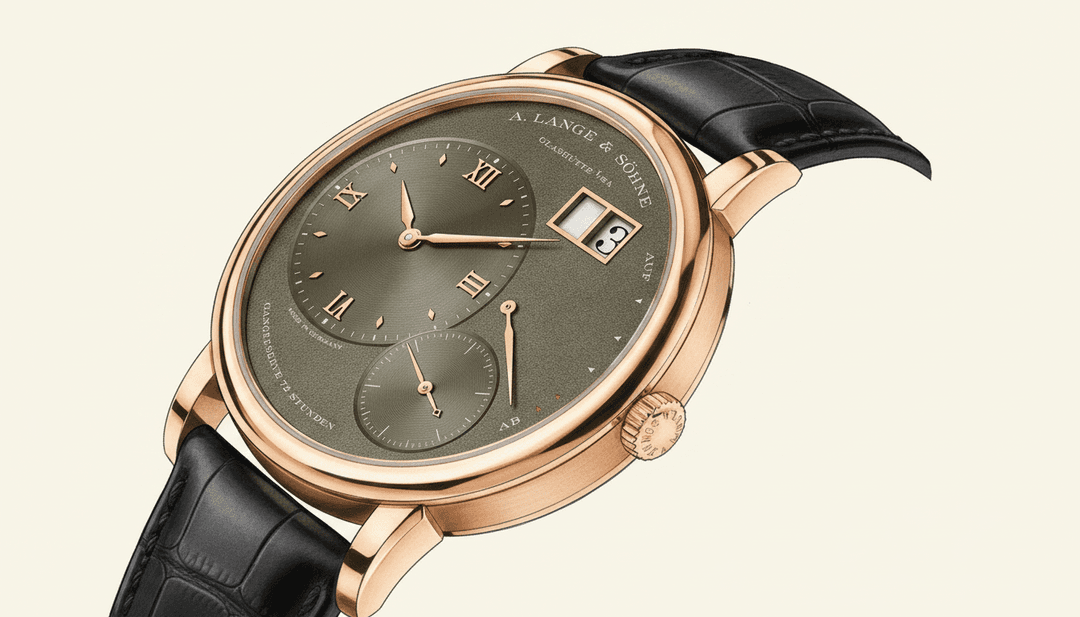
A. Lange & Söhne is focusing on historical pocket watch design details and downsized cases to anchor its modern collector appeal. This design direction highlights how the Saxon manufacture utilizes its archival engineering to sustain interest in its traditional collections. By shrinking case profiles and reviving specialized mechanical patents, the brand is positioning its classic hand-wound models as highly focused alternatives to larger contemporary sports watches. This strategy leverages the historical identity of the brand to reinforce its standing in the secondary and retail markets.
According to Monochrome Watches, the brand introduced new models of the 1815[2][1][1] Up/Down in compact cases that are smaller than the standard second-generation version released in 2013[1][1]. These new timepieces draw direct inspiration from a pocket watch device patented in 1879[1][1] for recognizing whether a watch is wound or unwound. This historical patent provides the foundation for the modern power reserve display, demonstrating how the manufacture links its contemporary catalog directly to nineteenth-century Saxon watchmaking innovations.
The mechanical execution of these downsized models relies on a space-saving planetary gear system integrated directly into the movement. Monochrome Watches reported that while power reserve indicators have been utilized since the nineteenth century, early designs were often complex and bulky, requiring numerous extra gears.[1] The patented system developed by Richard and Emil Lange solved this issue by utilizing a differential gear system that allowed pocket watches to maintain a slim profile. By integrating this planetary gear system directly into the calibre L051.2 rather than stacking it on top of the movement, the brand achieved a thin case height that emphasizes classical proportions.
This focus on refined proportions and historical complications was further highlighted at the Concours of Elegance at Hampton Court Palace. Revolution Watch reported that the brand selected this venue to unveil the compact white and pink gold models alongside a new platinum edition of its highly complex Triple Split. The split-seconds chronograph represents the pinnacle of the brand's modern mechanical capability, contrasting with the simpler, hand-wound layout of the smaller models. The pairing of these two distinct releases at a prestigious classic car venue demonstrates how the manufacture targets collectors who value mechanical depth and traditional craftsmanship.
The Triple Split has maintained a unique position in high-end watchmaking since its introduction. Revolution Watch noted that the model was first introduced in 2018,[2][2] as the only split-seconds chronograph capable of recording intermediate and comparative times for multi-hour periods. A pink gold edition with a blue dial followed in 2021[2][2], and the latest platinum version introduces a panda-style dial layout. This progression shows how the brand slowly iterates on its most complex calibres, maintaining extreme scarcity by limiting production and spacing out new metal variations over several years.
The decision to offer smaller case sizes and highly limited editions reflects a broader market trend toward classical dimensions and historical authenticity. By reducing the case size of the 1815 Up/Down, the brand addresses a growing demand for watches that wear comfortably and exhibit restraint. This approach helps insulate the brand from shifting fashion trends, ensuring that its core collections remain highly sought after on the secondary market. The combination of historical patents, mechanical ingenuity, and strict production limits continues to support the brand's secondary market pricing power.
The market mechanics of these limited releases are designed to maintain high demand through deliberate retail scarcity. By offering these models in limited quantities, the manufacture ensures that secondary market interest remains robust. This distribution strategy relies on close relationships with established collectors, who are often prioritized for these low-production references. The contrast between the simple elegance of the hand-wound models and the immense mechanical complexity of the platinum chronograph highlights the dual nature of the brand's appeal, attracting both purists of classical design and enthusiasts of grand complications.
Ultimately, the focus on historical patents and compact cases demonstrates how traditional watchmakers can innovate within the boundaries of their heritage. Rather than chasing modern design trends, the Saxon manufacture relies on its own archives to create timepieces that feel both historically significant and contemporary. This commitment to mechanical integrity and classical aesthetics ensures that the brand's watches remain highly valued by collectors who prioritize horological substance over temporary market hype. The ongoing refinement of these classic references suggests that the market for traditional, high-craft watchmaking remains resilient.
Related Coverage
Pricing CultureWatches - Oct 13, 2026
Breguet Updates Marine Watches with Eponymous Numerals and Finer Guilloché
The manufacture refines its signature sports line by replacing traditional Roman numerals with classic script and introducing a more detailed dial texture.
Recent coverage involving the same entity.
Watches - Oct 13, 2026
Audemars Piguet Targets Emerging Sports to Capture Younger Luxury Audiences
The Swiss watchmaker's Singapore padel activation demonstrates a calculated strategy to secure early brand equity in rapidly growing, unsaturated lifestyle domains.
Recent coverage involving the same entity.
watches - Sep 23, 2026
Historical Rolex manufacturing years establish secondary market value baselines
The chronological progression of technical achievements provides the historical scaffolding that supports the brand's enduring market dominance.
Recent Pricing Culture context on this market.
watches - Sep 22, 2026
Concentrated Watch Reference Indices Mask Wider Secondary Market Illiquidity
Divergent price trends between privately held blue-chip brands and publicly listed groups reveal a highly bifurcated secondary watch market where broad index metrics obscure transactional reality.
Recent Pricing Culture context on this market.
Sources
- 01
monochrome-watches.com
Introducing: The new, more compact A. Lange & Söhne 1815 Up/Down Limited EditionsSep 4, 2026
Source passage
A Lange & Söhne ’s 1815 collection honours the year of Ferdinand Adolph Lange’s birth with a lineup of traditional watches with design details inspired by Lange’s historic pocket watches. The seemingly straightforward 1815 Up/Down, with its power reserve indicator on the dial, has a fascinating historical background and was inspired by patent no. 9349 granted to A. Lange & Söhne in 1879 for a device in pocket watches “recognising whether the watch is wound or unwound.” Two new models, in compact 37.5mm pink or white gold cases, each limited to 300 pieces, join the family. While power reserve indicators have been used since the 18 th century, these were often complex, fragile and bulky, requiring many extra gears. Richard and Emil Lange’s patented power reserve addressed this issue with a space-efficient differential gear system, allowing their pocket watches to maintain a slim profile. Using the same foundational concept, Lange’s calibre L051.2 relies on a space-saving planetary gear system directly integrated into the movement, rather than stacked on top, resulting in the exquisitely thin 8.7mm case height. Available in pink or white gold, the 37.5mm case is smaller than the “standard” second-generation 39mm released in 2013 . A paragon of Saxon restraint and elegance, the case has horizontal satin-brushed flanks and a brightly polished concave bezel. The lugs, which are attac
- 02
revolutionwatch.com
A. Lange & Söhne Unveils a Platinum Triple Split and a Pair of 37.5mm 1815 Up/DownSep 4, 2026
Source passage
A. Lange & Söhne has chosen this year’s Concours of Elegance at Hampton Court Palace to unveil two models, each arguably in its most attractive form to date. A no-nonsense, dignified hand-wound watch and the simpler of the two by some distance, the 1815 Up/Down returns in a more compact 37.5mm case, offered in white or pink gold in a limited edition of 300 pieces each, with an ink-blue dial and silver subdials, while the Triple Split appears in platinum for the first time with a panda-style dial, limited to 100 pieces. A. Lange & Söhne 1815 Up/Down 37.5mm (Image courtesy of A. Lange & Söhne for Revolution) Most watches and complications have a way of eventually finding company, but both the Double and Triple Split have remained genuinely peerless. Introduced in 2018, 14 years after the Double Split, the Triple Split is the only split-seconds chronograph capable of recording intermediate and comparative times for up to 12 hours. The rattrapante mechanism extends beyond the central seconds hands to the minute and hour counters, which means that six chronograph hands must start, split, reunite, stop, reset and restart in perfect coordination. More than that, it is also a flyback, which means that timing can be reset and restarted instantly, even if the hands are held in split. The original version of the watch paired a white gold case with a grey dial and silver registers. It was