Auctions · The Desk
Fossil Collectors Face New Valuation Era After Historic Dinosaur Auction
A Tyrannosaurus rex skeleton named Gus has achieved a record sale of fifty point one million dollars, resetting the pricing benchmark for prehistoric specimens.
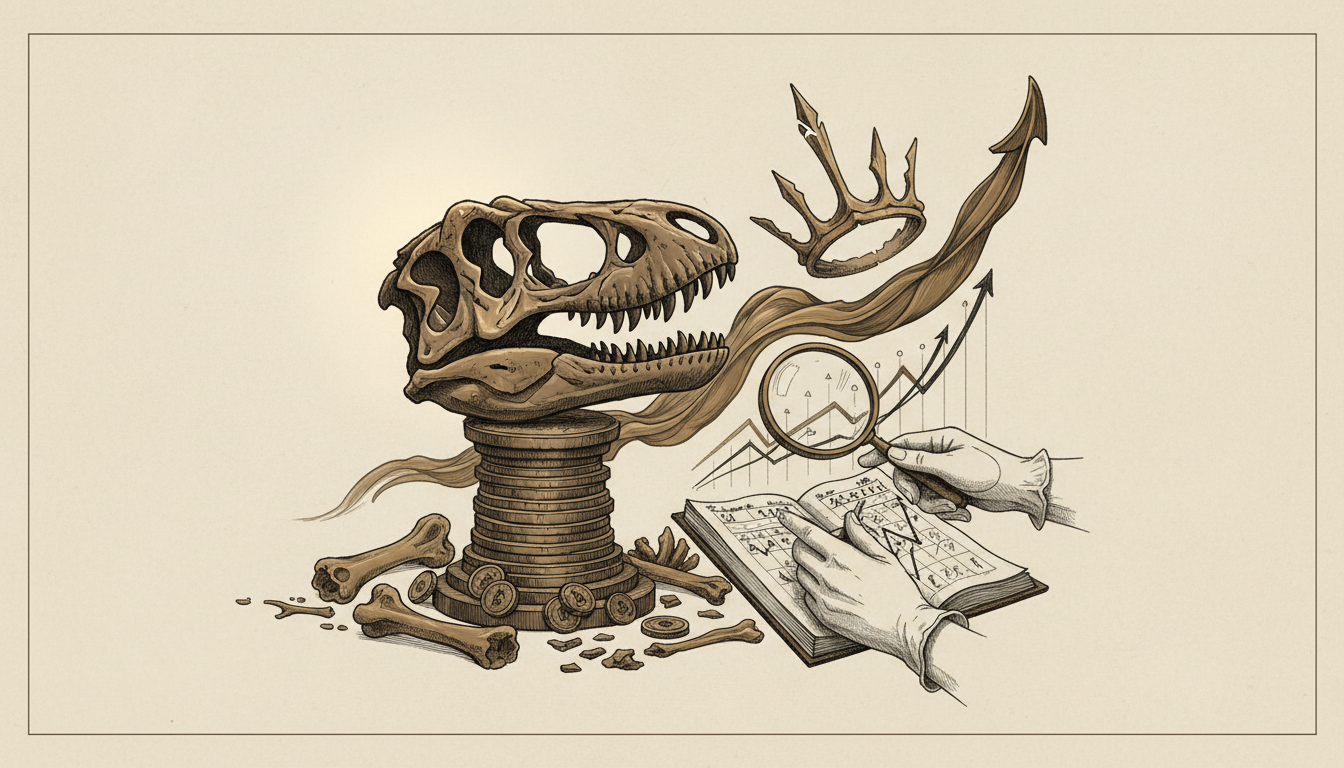
The market for natural history collectibles has reached an unprecedented financial peak, driven by the acquisition of one of the earth's ancient apex predators. A Tyrannosaurus rex skeleton, affectionately named Gus, has crossed the auction block to secure a place in history as the most expensive fossil ever sold. According to Barron's, the prehistoric specimen fetched a record-breaking fifty point one million dollars at auction. This transaction represents a defining moment for the alternative asset market, demonstrating that the appetite for trophy collectibles extends far beyond traditional fine art and classic automobiles.
For the community of high-end collectors and the professional advisors who serve them, the sale of Gus offers a fascinating look into the mechanics of valuation for unique assets. Unlike traditional asset classes where market depth provides a steady stream of pricing data, the market for major dinosaur skeletons is characterized by extreme scarcity. Each discovery is a singular event, and the successful excavation, preparation, and mounting of a giant skeleton require years of meticulous labor. When such a specimen finally reaches the public market, it commands a premium that reflects not just its scientific rarity, but its status as a sculptural masterpiece of the natural world.
This landmark transaction highlights the growing convergence between natural history and fine art collecting. Over the past decade, prominent art collectors have increasingly integrated fossils into their private galleries, viewing them as ultimate conversation pieces that bridge the gap between science and aesthetics. The fifty point one million dollar valuation reported by Barron's elevates Gus into the same financial tier as masterpiece paintings by legendary artists. This crossover appeal has expanded the buyer pool, bringing fresh capital into a market that was once dominated by academic institutions and specialized enthusiasts.
However, the stratospheric pricing of such specimens introduces complex challenges for appraisers and insurance specialists. Determining the fair market value of a Tyrannosaurus rex skeleton is an incredibly difficult task when comparable sales are years apart. Appraisers must evaluate a myriad of factors, including the percentage of original bone material present, the quality of the preservation, the aesthetic pose of the mount, and the historical significance of the find. With Gus setting a new high-water mark, previous benchmarks must be re-evaluated, forcing professionals to recalibrate their risk models and coverage limits for high-value natural history collections.
The sale also brings the ongoing tension between private ownership and public science back into focus. Whenever a major fossil is acquired by a private collector, scientific communities express concern over the potential loss of research access. For advisors working with high-net-worth clients, navigating these ethical considerations has become an essential part of the acquisition process. Many collectors choose to mitigate these concerns by pledging to loan their specimens to museums for public display and study, thereby balancing the pride of private ownership with a commitment to scientific advancement.
Ultimately, the historic sale of Gus demonstrates the enduring allure of tangible history. In an era of digital assets and volatile financial markets, the appeal of owning a physical relic from millions of years ago remains incredibly strong. As more collectors look to diversify their portfolios with alternative assets, the market for exceptional natural history specimens is poised to attract continued attention. The fifty point one million dollar benchmark established by Gus will undoubtedly influence future consignments and shape the strategies of auction houses specializing in this extraordinary category of collectibles.